Chapter 3
Plant Kingdom

- Basis of Classification and Algae, Bryophytes & Pteridophytes
- Types of Taxonomies
- Classification of Algae
- Bryophytes
- Pteridophytes
- Gymnosperms, Angiosperms and Plant Life Cycles
- Classification of Angiosperms
Basis of Classification and Algae, Bryophytes & Pteridophytes
Our understanding of the plant kingdom has changed over time. Fungi and members of the Monera and Protista having cell walls have not been separated form Plantae, the earlier classifications kept them in the same kingdom. The kingdom-Plantae has been described under algae, bryophytes, pteridophytes, gymnosperms and angiosperms. The overview of this classification is demonstrated here in the flowchart.
Types of Classification System
These includes artificial system, natural system and phylogenetic system of classification.
The various systems used in classification ofiplants are being discussed here
1. Artificial System of Classification
This system is based on comparison of one or a few superficial characteristics, which are helpful in easy identification of organisms. This system remained in use for about two thousand years.
Aristotle is known as father of Zoology.
Carolus Linnaeus is known as father of Taxonomy.
Advantages
Advantages of artificial system as below
(i) Artificial system is easy to remember as only one or few characters are used.
(ii) The traits used are of interest to humans.
Disadvantages
Disadvantages of artificial system are given below
(i) This system use only few superficial characters (i.e., habits, numbers, colours and shapes of leaves, etc) which leads to many organisms grouped together,
(ii) They considered mainly the vegetative characters or the androecium characters as given by linnaeus.
(iii) It does not demonstrate natural and phylogenetic relationships.
(iv) This gave equal weightage to vegetative and reproductive/sexual characters this is not acceptable, as vegetative characters are more easily influenced by the environmental factors.
(v) They sparated the closely related species.
2. Natural System of Classification
It is also known as phenetic system of classification. The natural system of classification is based on natural affinities among the organisms. It considers both external and internal features like structure, anatomy, embryology and phytochemistry.
Advantages
Advantages of natural system are given below
(i) Only related organisms are kept in a group.
(ii) Unrelated organisms are kept in separate groups.
(iii) It shows natural relationships among the organisms.
(iv) It shows possible origin of different taxa.
Disadvantages
Disadvantages of natural system are given below
(i) There is more emphasis given on natural character.
(ii) In this system several related families are separated and unrelated families are put together.
(iii) Evolutionary basis is neglected.
3. Phylogenetic System of Classification
The phylogenetic system of classification indicates the evolutionary as well as genetic relationships among organisms. This system is based on fossil records of biochemical, anatomical, morphological, physiological, embryological and genetical.
The system was initiated by Engler and PrantI (1887-1899) in Die Naturalichen Pflanzefamilien. In phylogenetic system, flowering plants are placed in ascending series related to complexity of floral morphology. The phylogenetic system of classification are mainly the rearrangement of taxonomic characters in addition to the phylogenetic information.
Advantages
Advantages of phylogenetic system are given below
(i) Families and order in this system are of small size.
(ii) This system is in conformation with the modern views of phylogeny.
(iii) They use information from various sources to solve problems of classification. Such informations become more important in the absence of supporting fossil evidences.
Disadvantages
Disadvantages of phylogenetic system are given below
(i) This is not helpful in plant identification.
(ii) The classification is outdated as the habit is used as . main basis of classification.
Types of Taxonomies
For the suitability in studies various categorizations has been done in taxonomy.
The important taxonomies are as follows
1. Numerical Taxonomy
It is carried out by quantitative assessment of similarities and differences in order to make objective assessments. It is now easily carried out using computers based on all observable characteristics. Number and codes are assigned to all the characters and the data are then processed. In this way, each character is given equal importance and at the same time hundreds of characters can be considered.
2. Cytotaxonomy
Cytotaxonomy is based on cytological information like chromosome number, structure, behaviour and type of chromosomes. For example,
(i) Chromosome number is constant for a species, e.g., 46 in man, 48 in apes and potato, 20 in maize, 16 in onion and 8 in Drosophila.
(ii) Behavior of chromosomes was used by taxonomists during pairing and banding patterns to understand the relationships between species, e.g, Origin of humans from apes, origin of wheat, etc.
3. Chemotaxonomy
It is the system based on the evidences from chemical constituents (enzymes, hormones, proteins, amino acids, etc.), some specific chemicals (usually secondary metabolites) and the chemical nature of proteins have been utilised to establish similarities and relationships. For example, the presence of raphides has been found to be common in 35 families of plants.
Algae
Algae are chlorophyll-bearing, simple, thalloid, autotrophic and largely aquatic (both freshwater and marine) organisms.
The important salient features of algae are given below
Habitat
These are found in both freshwater and marine habitats. Some algal forms are also found in moist habitats like wet rocks and soil, tree trunks, etc. Some of them are also found in close association with fungi (lichen) and animals {e.g., on sloth bear).
Thallus Organisation
The plant body (thallus) is without differentiation. The basic form and size of algae is highly variable, and ranges from filamentous {e.g., Ulothrixand Spirogyrd) to colonial {e.g., Volvox). These are attached on the substratum with the help of holdfast.
Structure of Algal Cell
It has an eukaryotic plant cell structure. The cytoplasm contains membrane bound chloroplast, mitochondria, ER, Golgi bodies and other cell organelles. The cell wall contains cellulose. The nucleus contains nuclear membrane.
Food Material
Algae have main food reserve as starch. In brown algae, mannitol and laminarin are the main reserve food material, whereas in red algae floridean starch is the reserve food material.
Reproduction
The algae reproduces vegetatively, asexually and sexually.
i. Vegetative Reproduction
It occurs by fragmentation, tubers, stolons, adventitious branches, etc. Each fragment gets develop into a thallus.
ii. Asexual Reproduction
It occurs by a number of accessory spores, such as zoospores aplanospores, akinetes, carpospores, etc.
The most common being the zoospores, which are flagellated. The cells which produce spores are called sporangia. The sporangia may be the vegetative cells (e.g. in Chlamydomonas and Ulothrix) or modified vegetative cells (e.g. in Vaucheria).
iii. Sexual Reproduction
It occurs by fusion of two gametes.
On the basis of morphology of reproductive cells, sexual reproduction is of two types
(a) Isogamy In this method, two morphologically similar gametes fuse to form a zygote, e.g., Spirogyra.
(b) Heterogamy In this process, fusion occurs between morphologically as well as physiologically different gametes. It is of two types
Anisogamy It is the fusion of structurally dissimilar gametes, which differ in size and – behaviour. Male gamete is more active and female gamete is less active and bigger in size, e.g., Some species of Chlamydomonas.
* Oogamy In this process, the male gamete is motile, active, small and without reserve food.
The female gamete is bigger, passive, non-motile and laden with food, e.g., Volvox, Fucus.
Embryo and Life Cycle
An embryo stage is not present. Life cycle is haplontic, diplontic, diplohaplontic, haplohaplontic, etc. An alternation of generation occurs in diplohaplontic life cycle.
Economic Importance of Algae
(i) Algae are responsible for carrying out about a half of the total carbon dioxide fixation on earth by the process of photosynthesis.
(ii) Some forms of marine brown and red algae produce large amount of hydrocolloids. These are algin (brown algae) and carrageenan (red algae) which have many commercial uses.
(Hi) The algae Gelidium and Gracilaria are used to produce agar, which is used in preparation of ice creams and jellies.
(iv) Some protein rich algae, like Chlorella and Spirullina are used as food supplements by sailors and space travellers.
(v) About 70 species of marine alga are used as food, e.g., Porphyra, Laminaria and Sargassum.
Classification of Algae
Algae are divided into various classes based on pigmentation, stored food and flagellation. The three main classes are
Chlorophyceae, Phaeophyceae and Rhodophyceae.
i.Class-Chlorophyceae (Green Algae)
The members of Chlorophyceae are commonly called green algae.
There are about 7000 species in this class. The reserve food material is starch.
The characteristic features of Chlorophyceae are discussed below
(a) Habitat These are mostly marine forms, only some are freshwater. Chlorella can tolerate moderately warm waters. Snow dweling forms are called cryophytes, e.g., Chlamydomonas nivalis, Scotiella, etc.
(b) Cell Organisation These are unicellular, colonial, coenocytic and multicellular forms. Cell walls contain cellulose (inner layer) and pectose (outer layer) in most of the green algae. The chloroplasts may be discoid, plate-like, reticulate, cup-shaped, spiral or ribbon shaped.
The chloroplasts contain pigments. Most of the members have one or more storage bodies called pyrenoids located in” the chloroplasts. Pyrenoids contain protein besides starch. Some algae may store food in the form of oil droplets also.
(c) Thallus Unicellular green algae can- be flagellate, (Chlamydomonas), unicellular, non-flagellate (Chlorella).
Acetabularia (umbrella plant) has unicell upto 10 cm long with distinction of nucleus containing rhizoid, elongated stalk and umbrella like cap.
A colony for fixed number of individual unicells (Volvox) is called coenobium. Coenocytic or siphonaceaus thallus occurs in Caulerpa. Unbranched filamentous thallus in Ulothrix and Spirogyra, Cladophora, heterotrichous in Stigeoclonium and parenchymatous in Ulva.
(d) Reproduction The members of Chlorophyceae reproduce vegetatively, asexually and sexually by various methods.
* Vegetative reproduction occurs through cell division (unicellular forms), fragmentation, stolons, tubers, storage cells, etc.
* Asexual reproduction occurs by zoospores, aplanospores, hypnospores, akinetes and daughters colonies.
* Sexual reproduction may be isogamous, anisogamous or oogamous.
(e) Life Cycle It can be haplontic, diplontic and diplohaplontic. In haplontic life cycle, there is a single somatic phase, which is haploid. Diploid stage is represented by a single cell or zygote, e.g., In Spirogyra.
ii. Class-Phaeophyceae (Brovin Algae)
The members of Phaeophyceae are fucoxanthin and phycocolloid rich multicellular eukaryotic algae. Its common members are seaweeds called kelps. This class is comprised of about 2000 species.
(a) Habitat Brown algae are mostly marine. These are found mostly in colder seas or during cold seasons in tropical regions.
(b) Size They range from simple branched, filamentous forms (Ectocarpus) to profusely branched forms as represented by kelps. These represent largest algae. The largest kelps are Macrocystis (40-100m) and Nereocystis (20-30 m).
(c) Cell Organisation All members are multicellular. Cell wall is composed of cellulose, pectose and phycocolloids. The cellulosic wall of vegetative cells is usually covered on the outside by a gelatinous coating of algin.
(d) Thallus It is heterotrichous filament with both prostrate and upright branches (Ectocarpus). The parenchymatous structure is found in higher forms. The plant body of large forms often differentiated into holdfast (with which it usually attaches to the substratum) a stalk called the stipe and lamina (frond), which is photosynthetic. Conducting tubes or trumpet hyphae are present in larger brown algae or kelps. They help in conduction of food materials.
(e) Photosynthetic Pigments and Colour These include chlorophyll-4, c and carotenoids. They ranges in colour from olive green to various shades of brown depending upon the amount of the xanthophyll pigment, fucoxanthin present in them.
(f) Food Reserve It remains in the form of complex carbohydrates such as laminarin or mannitol.
(g) Flagellation These contain heterokont flagellation with one smooth (whiplash) and one tinsel flagella.
(h) Reproduction Vegetative reproduction occurs through fragmentation (e.g., Sargassum), adventitious branches and stolons (e.g, Dictyota). Asexual reproduction by biflagellate zoospores, which are pear-shaped having two unequal laterally attached flagella.
Sexual reproduction is performed by isogamy, anisogamy and oogamy. Union of gametes may take place in water or within the oogonium (oogamons species). The gametes are pyriform (pear-shaped) and have two laterally attached flagella.
(i) Life Cycle Isomorphic alternation of generation is found in some brown algae, e.g, Ectocarpus, Dictyota. In many brown algae, the diploid generation or phase is dominant. The haploid phase is either microscopic or represented by gametes only (e.g., Fucus).
Economic Importance of Pheophyceae
* The brown algae that are used as food are Laminaria, Nerocystis, Macrocystis, Alaria, etc.
* Some brown algae like Fucus, Sargassam, Laminaria, Macrocystis are important fodder for catde.
* Brown algae are collected from sea shores and used as manure. They improve mineral content of soils.
* Alginic acid is a phycocolloid obtained from a number of brown algae such as Alaria, Macrocystis, Ascophyllum, Laminaria. It is used as emulsifier, thickener, gelating agent in toothpastes, shaving creams, ice-creams, emulsion paints, shampoo, cosmetics, etc.
* Fucus and Laminaria are rich in iodine.
iii. Class-Rhodophyceae (Red Alqae)
The members of Rhodophyceae are commonly called red algae because of the predominance of the red pigment,i.e., r-phycoerythrin in their body.
(a) Habitat Most of the red algae are marine with greater concentrations found in the warmer areas. They are found in both well lighted regions close to the surface of water and also at great depths in oceans where relatively little light penetrates.
(b) Thallus The red thalli of most of the algae are multicellular. Some of them have complex body organisation like Asterocystis is pseudofilamentous, Porphyridium is unicellular, Porphyra has parenchymatous sheets, Cbondrus is ribbon like, Gelidium is a multicellular sea weed.
(c) Cell Wall The cell wall contains cellulose, pectic compounds and certain mucopolysaccharides called phycocolloids, such as agar, carrageenin, etc. In many algae, cell wall contains pits.
(d) Photosynthetic Pigments These include chloro¬phyll-4, carotenes, xanthophylls and phycobilins. Phycobilins are water soluble and are of two types, i.e., red-coloured phycoerythrin and blue-coloured phycocyanin.
(e) Reserve Food It is floridean starch similar in constitution to glycogen and amylopectin. if) Reproduction Vegetative reproduction occurs by fragmentation, regeneration of hold fast and gemmae. Asexual reproduction occurs by non-motile spores (carpospores, monospores, tetraspores and neutral spores).
(f) Sexual reproduction occurs by non-motile gametes and is oogamous type. The male sex organs is called spermatogonium or antheridium. The male produced is non-flagellated, called as spermatium. The female sex organ is called carpogonium. After fertilisation, a new structure called carposporophyte is produced. It remains attached to the parent alga.
(g) Life Cycle Life cycle has two or more phases such as haplohaplontic, haplohaplohaplontic, diplodiplohaplontic, etc.
Economic Importance of Red Algae
* The red algae like Porphyra, Chondrus, Rhodymenia, Centerella and Bostrychia are used as food in various parts of the world.
* Agar yielding algae are called aerophytes, such as Gelidium, Gracilaria, Ceramium, Gelidiella, etc.
* Alga like Rhodymenia are used as fodder for cattle.
* Carrageenin a phycocolloid obtained from red algae like Chondrus and Gigartina is used in preparations of emulsions for ice cream, chocolates, sauces, toothpastes, cosmetics, etc. It is also used in clearing liqueurs and finishing leather, etc.
* Funori an adhesive phycocolloid is obtained from red alga Gloiopeltis. It is used in sizing textiles, paper and as glue.
* Some algae like Corallina, Polysiphonia have medicinal properties.
Bryophytes
Bryophytes include the various mosses and liverworts. These are non-vascular embryophytes, characterised by the presence of. an independent gametophyte and parasitic sporophyte.
Habitat
Bryophytes commonly grow in -moist, shaded areas in hills. These are also called amphibians of the plant kingdom because, these can live in soil but are * dependent on water for sexual reproduction.
Rhizoids
These are attached to the substratum by unicellular or multicellular rhizoids.
Sex Organs
The main plant body produces gametes, hence it is called gametophyte. The sex organs in bryophytes are multicellular, the male sex organs in bryophytes is called antheridium (which produces biflagellate antherozoids) and the flask-shaped female sex organ is called archegonium (produces a single egg).
Reproduction
It is of sexual type reproduction. The antherozoids are released into water where they come in contact with archegonium.
Fertilisation
It occurs inside the archegonium. The egg secretes a chemical which attracts spermatozoids. Sperms require a thin film of water for swimming and reaching the dehisced archegonium. One sperm fuses with an egg and produces a diploid zygote. Zygotes do not undergo reduction division immediately instead, they produce a multicellular body called sporophyte.
Dependent Sporopbvrc The sporophyte is not free-living but attached to the photosynthetic gametophyte deriving nourishment from it. Some cells of the sporophyte undergo reduction division (meiosis) to produce haploid spores (which germinate to produce gametophyte).
The sporophyte of bryophytes is called sporogonium because it is mainly dependent and meant for producing spores.
Life Cycle
Bryophytes have heteromorphic or heterologous alternation of generation. The gametophyte may be produced directly or first from a juvenile stage called protonema.
Economic Importance
Bryophytes in general are of little economic importance. But, several species have some uses.
(i) Some mosses provide food for herbaceous mammals, birds and other animals.
(ii) Species of Sphagnum (a moss), provides peat that
have long been used as fuel. It has the capacity to hold water as packing material for transshipment of living material.
(iii) Mosses along with lichens are the first organisms to colonise rocks. Hence, these help in biological succession. They decompose rocks making the substrate suitable for the growth of higher plants.
(iv) Mosses from dense mats on the soil, they reduce the impact of falling rain and prevent soil erosion.
(v) Marchantia has medicinal properties to cure lungs and liver infections. It also has antitumour properties.
Bryophytes do not attain great heights. They may range of 0.4 to 70 cm and have thalloid body.
The reasons may be following
(i) Root is absent.
(ii) Vascular tissues are not present.
(iii) Cuticle is not present on the plant body.
(iv) Absence of mechanical tissue.
(v) Male gametes need to swim upto the interior of dehisced archegonia.
Types of Bryophytes
The bryophytes are generally classified into two main groups
i. Liverworts
Liverworts (Hepaticopsida) usually grow in moist, shady places such as banks of streams, marshy ground, damp soil, bark of trees and deep in the woods.
(a) Thallus The plant body of a liverwort is thalloid, e.g, Marchantia,. The thallus is dorsoventral and closely appressed to the substrate. The leafy members have tiny leaf like appendages in two rows on the stem like structure.
(b) Rhizoids These are unicellular. These may be of two types in some liverworts, i.e. smooth walled and tuberculate.
(c) Reproduction It may occur both by asexual and sexual means.
• Asexual Reproduction It occurs by fragmentation of thalli or by the formation of specialised structures called gemmae (sing, gemma). Gemmae are green, multicellular, asexual buds which develop in small receptacles called gemma cups located on the thalli. The gemmae become detached from the parent body and germinate, forming new individuals.
• Sexual Reproduction During this male and female sex organs are produced either on the same or on different thalli. The sporophyte is differentiated into a foot, seta and capsule. After meiosis, spores are produced within the capsule.
• These spores germinate to form free-living gametophytes, e.g., Riccia, Marchantia, Pellia, Porella, etc.
ii. Mosses
Mosses (Bryopsida) grow in dense mats over moist shady places, especially during rains. Some mosses grow in desert bogs and streams.
(a) Plant Body The predominant stage of the life cycle of a moss is the gametophyte which consists of two stages the first stage is the protonema stage which develops directly from a spore. It is a creeping, green, branched and frequently filamentous stage; the second stage is the leafy stage which develops from the secondary protonema as a lateral bud. They consist of upright, slender axes bearing spirally arranged leaves. This stage bears sex cells.
(b) Rhizoids These are long, multicellular branched structures with oblique septa. They take part in fixation and absorption of water. However, surface conduction through capillarity is an important mechanism of water supply to aerial parts.
(c) Reproduction This can occur both by vegetative and sexual means.
* Vegetative Reproduction It occurs by fragmentation and by budding in the secondary protonema from exposed rhizoids and other parts (like gemmae, buds and tubers).
Sexual Reproduction Sex organs, antheridia and archegonia are produced at the apex of the leafy surface. Male organs appear cup-shaped, while female organs are bud-like. After fertilisation, the zygote develops into a sporophyte, consisting of foot, seta and capsule (containing spores).
(d) Sporophyte The sporophyte in mosses is more elaborate than that in liverworts. Spores are formed after meiosis. The mosses have an elaborate mechanism of spore dispersal, e.g., Funaria, Polytrichum and Sphagnum.
Pteridophytes
Pteridophytes are primitive seedless vascular plants also called cryptogams. These have conspicuous sporophytic plant body, inconspicuous independent gametophytes with antheridia and partially embedded archegonia having 4-rowed necks.
The term Pteridophyte was coined by Haeckel (1866). There are about 13000 species of pteridophytes have been reported. They were perhaps the first land plants evolved during ordovician (450-500 million years ago) period.
The characteristic features of pteridophytes are as follow
Habitat
The pteridophytes are found in cool, damp shady places though some may flourish well in sandy-soil conditions.
Some members like Azolla, Salvinia, Marsilea species.
Plant Body
The size varies from a fraction of centimeter (e.g, Azolla) to 20 m in tree ferns (e.g, Angiopteris). The main plant body is a sporophyte which is differentiated into true root, stem and leaves. These organs possess well differentiated vascular tissues. The leaves are small (microphyllus) as in Selaginella or large (macrophylls) as in ferns.
Vascular Tissues
These are xylem and phloem present throughout the body. Xylem consists of tracheids and phloem is made up of sieve cells and albuminous cells.
Sporophylls
The sporophytes bear sporangia that are subtended by leaf like appendages called sporophylls. In some cases sporophylls may form distinct compact structure called strobili or cones (Selaginella and Equisetuni). The sporangia produce spores by meiosis in spore mother cells.
Spores
The spores germinate to give rise to inconspicuous, small but multicellular free-living, mostly photosynthetic thalloid gametophytes called prothallus. In majority of the pteridophytes, all the spores are of similar kinds; such plants are called homosporous. Genera like Selaginella and Salvinia which produce two kinds of spores, macro (large) and micro (small) spores; such plants are called heterosporous.
Gametophyte
The thalloid gametophyte or prothallus require cool, damp, shady places to grow. The megaspores and microspores germinate and give rise to female and male gametophytes respectively. The female gametophytes in these plants is retained on the parent sporophytes for viable periods. In most ferns, prothallus is green and autotrophic. In heterosporous ferns, the female gametophyte depends on food stored by the megaspore.
Sex Organs
The gametophytes bear male sex organs called antheridia and female sex organs called archegonia. Antheridium is sessile and surrounded by a single layered jacket. Archegonium is flask-shaped. It is partially embedded.
Fertilisation
Water is required for transfer of antherozoids. The male gametes released from the antheridia and reach to the mouth of archegonium. Fusion of male gamete with the egg present in the archegonium result in the formation of zygote. Zygote therefore, produces a multicellular, well differentiated sporophyte, which is the dominant phase of the pteridophytes.
Embryo
Fertilisation produces a zygote that undergoes division to produce embryo. The development of the zygote into young embryo takes place within the female gametophyte.
* This event is a precursor of the seed habit and considered as an important step in evolution, e.g., Dryopteris, Selaginella, Adiantum, Equisetum and Salvinia.
Economic Importance of Pteridophytes
(i) Pteridophytes are a good source of food for animals. For example, sporocarps of Marsilea is edible. Angiopteris and Alsophila have starchy pith eaten by natives of Australia.
(ii) Ferns protect soil from erosion by providing a good cover on the hill slopes and other fragile places.
(iii) Equisetum stems have rough surfaces. They are used in scrubbing and polishing.
(iv) Azolla a water fern has a symbiotic association with nitrogen fixing cyanobacterium Anabaena azollae. It is cultured in paddy fields to harbour nitrogen fixing bacterium. Thus, act as a biofertiliser.
(v) Rhizomes and petioles of Dryopteris are used to produce anthelmintic drug. Roots of Adiantum can cure throat infections. Lycopodium is used in treatment of rheumatism and disorders of lungs and kidneys.
(vi) Ferns are also grown as ornamental plants for their graceful plant body.
Classification of Pteridophytes
The pteridophytes are further classified into four classes
(i) Psilopsida (Psilotum)
(ii) Lycopsida (Selaginella and Lycopodium)
(iii) Sphenopsida (Equisetum)
(iv) Pteropsida (Dryopteris, Pteris and Adiantum)
Differences between Bryophytes and Pteridophytes
2. Gymnosperms, Angiosperms and Plant Life Cycles
Gymnosperms
The gymnosperms (Gymnos = naked; sperma = seeds) are plants in which the ovules are not enclosed by any ovary wall and remain exposed, both before and after fertilisation. These are small groups of seed plants which are represented by only 900 living species. Unlike bryophytes and pteridophytes, in gymnosperms the male and the female gametophytes do not have an independent free-living existence. They remain within the sporangia retained on the sporophytes.
Habitat
These plants are mostly found in colder parts of northern hemisphere, where they form extensive forests. A number of gymnosperms are now, known as ornamentals, e.g., Ginkgo, Thuja, Araucaria, etc.
Morphology
Gymnosperms include, medium-sized trees or tall trees and shrubs. The giant red wood tree Sequoia is one of the forest tree upto 100 m. Species of Gnetum are woody climbers. The smallest gymnosperm is Zamia pygmaea which reaches a height of 25 cm. Many of the gymnosperms live for more than 4000 years, e.g, Pine (Pinus), redwood {Sequoia).
External Features
The plant body is sporophyte and differentiated into root, stem and leaves.
Plant Body
Tap roots are present for proper anchorage to heavy plant. Roots in some genera have fungal association in the form of mycorrhiza {Pinus), while in some others {Cycas) small specialised roots called coralloid roots are associated with N2-fixing cyanobacteria such as Anabaena, Nostoc, etc.
The stems are branched {Pinus, Cedrus) or unbranched {Cycas). The leaves may be simple or compound.
Archegonia
The megaspore mother cell thus, undergo meiotic division forming four megaspores. Out of which one is enclosed within the megasporangium (nucellus) and develops into a multicellular female gametophyte, bearing two or more archegonia of female sex organs.
The multicellular female gametophyte is also retained within megasporangium.
Fertilisation
Air current required for transport of male gametes. The male gametes are carried to the archegonia, i.e., gamete in the ovule by means o’f a tube called pollen tube and discharge their contents near the mouth of the archegonia. This is called siphonogamy.
Seeds
Following fertilisation, zygote develops into an embryo and the ovules into seeds. The seeds contain food laden tissue called endosperm. It lies naked or exposed. Endosperm provides nourishment for growth of seedling at the time of seed germination.
Examples Cycas, Pinus, Ginkgo, Ephedra, Gnetum, Vaucheria, Cedrus, Abies, etc.
Differences between Microsporophyll and Megasporophyll
Classification of Gymnosperms
Gymnospermsfurther include three main classes Cycadopsida (cycads), Coniferopsida (conifers) and Gnetopsida (Gnetum).
Differences between Male Gametophyte of Pteridophyte and Gymnosperms
Male Gametophyte of Pteridophyte Male Gametophyte of Gymnosperms
A distinct male gametophyte may not be present. A distinct male gametophyte is present.
It contains an antheridium. Antheridium is not present.
Male gametes are flagellate. Male gametes can be flagellate or non-flagellate.
Male gametes reach female gametes by swimming in water. Male gamete reach the female gamete through a pollen tube.
Economic Importance of Gymnosperms
(i) Seeds of Pinus gerardiana (chilgoza) are used a food after roasting. Some other edible gymnosperms plant part are endosperm of Ginkgo, seed kernel of some Cycas and Gnetum, sago grains from stems of Cycas, etc.
(ii) Gymnosperms provide softwood for construction, plywood and paper industry.
(iii) Branches of gymnosperm trees are used as fuel food.
Saw dust of conifers is used in making plastics and linoleum.
Resin is a semifluid secreted by special tubes of a number of conifers. It helps in sealing female cones after pollination, scale leaves around leaf bases and apical buds. Resin is distilled to obtain turpentine and resin. Turpentine is used for . thinning paints, varnishes, etc., and resin is used
for sealing joints, wheel green, preparation of writing paper, oil clothes, etc.
(iv) Ephedrine an antibiotic is obtained from Ephedra. It is used for curing respiratory problems and asthma. Taxol is an anticancer drug obtained from Taxus.
Angiosperms
Angiosperms are seed bearing plants or flowering plants. Unlike gymnosperms where the ovules are naked, in angiosperms the sporophyll are organised into flowers and the seeds are produced inside fruits. There are about 250000 species of angiosperms in the nature. They evolved about 130-160 million years ago.
Habitat
Angiosperm are found in wide range of habitats, from the land to up to 6000 m in Himalayas or Antarctica and Tundra, dry hot deserts, cold deserts, tropics, fresh water up to 60°C, underground, over other plants as parasites, saprophyte, etc. Zostera is a marine angiosperm.
Plant Body
These plant are sporophytic, in the form of herbs, shrubs, trees, climber creepers, etc. The smallest angiosperm is water plant Wolffia and tallest is Eucalyptus regnans (100 mand above). Primary root develops from radicle. It forms tap root system. In many angiosperms roots develop from places other than radicle, these are adventitious roots. Stem develops from plumule.
Leaves
These are simple or compound. The leaves bear axillary buds which can grow into stem branches.
Vascular Tissues
Angiosperms have vessels in xylem. Phloem contains sieve tubes and companion cells in regard to gymnosperms which do not have companion cells.
Flowers
Flowers are the reproductive structures formed by the union of one or both types of sporophylls (microsporophylls or stamens and megasporophylls or carpels).
Microsporophylls or Male Sex Organs
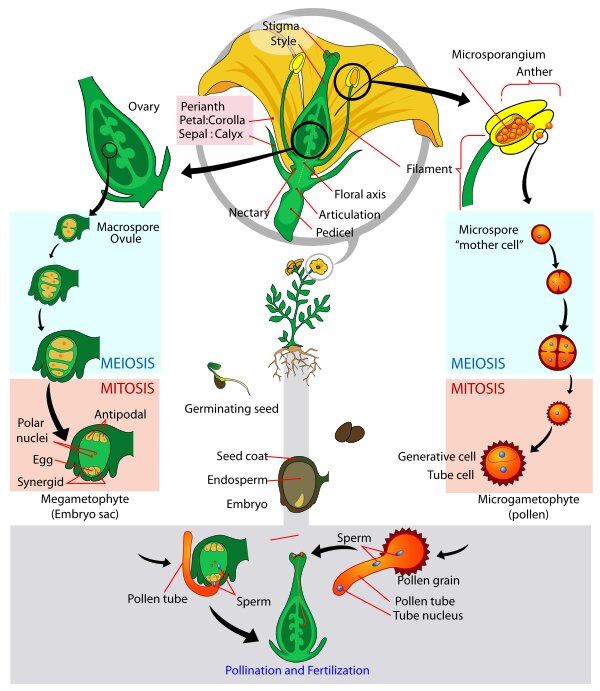
Stamens are considered as the male sex organs of a flower. Each stamen has two main parts, i.e., a slender filament with an anther (at the tip). An anther contains four microsporangia where microspore mother cells become differentiated to form four microspores, each developing into a pollen grain.
Megasporophylls or Female Sex Organs
Carpel or pistil is called the female sex organ of the flower. Each carpel has three parts {i.e., an ovary, style and stigma). A megaspore mother cell is differentiated in the nucellus and undergoes meiosis, ultimately one functional megaspore gets enlarged and forms the female gametophyte known as embryo-sac.
Each cell of an embryo sac is haploid:
Embryo Sac
Each embryosac contains a three celled eg® apparatus consisting I of one egg cell and two synergids, three antipodal cells (at the i opposite end) and two polar nuclei (in the central cell). The polar : nuclei eventually fuses and forms diploid secondary nucleus.
Pollination
Pollen grains after dispersal from the anthers are carried by various ways such as wind, water or by various other agencies to the stigma of the pistil.
Fertilisation and Development of a Seed
Each pollen grain germinates on the stigma forming a pollen tube that carries two male gametes to the embryo sac, growing through the tissues of stigma and style.
One of the male gametes fuses with the egg cell to form a zygote (syngamy).
The other male gamete fuses with the diploid secondary nucleus to produce the triploid Primary Endosperm Nucleus (PEN). Because of the involvement of above mentioned two events, it is known as double fertilisation. After fertilisation, synergids and antipodal cells degenerate.
The zygote develops into embryo and the primary endosperm nucleus develops into an endosperm.
The ovule gradually transforms into a seed and the ovary becomes the fruit. A fruit is actually a ripened ovary. They not only protect the seed but also help in their dispersal.
Classification of Angiosperms
George Bentham and Joseph Dalton Hooker presented the system of classification of angiosperm* published in Genera Plantarum (1862-1883) which appeared in three volumes.
This system of classification is used by most of the well known Herbaria of the world. The details of this system are not described here. Conveniently, on the basis of the number of cotyledons angiosperm are classified in two broad groups i.e., Monocotyledonae and Dicotyledonae.
Economic Importance of Angiosperms
(i) The angiosperms are major source of food, fibers, spices and beverages.
(ii) They also provide valuable timber and medicines.
(iii) These also add beauty to our environment as well.
Alteration of Generation
Life cycle of an organism is a sequence of events that occur from birth to death of an organism. In plants, both haploid and diploid cells can divide by mitosis.
This feature leads to the formation of different plant bodies haploid and diploid. The haploid plant body produces gametes by mitosis. This plant body represents a gametophyte.
After fertilization, zygote also divides by mitosis to produce a diploid saprophytic plant body. Haploid spores are produced by this plant body by meiosis. These in turn, divide by mitosis to form a haploid plant body once again.
Thus, during the life cycle of any sexually reproducing plant, there is an alternation of generation between gamete producing haploid gametophyte and spore producing diploid saprophyte.
Plant Life Cycles
Different plant groups and individual have different features in their life cycle
Haplontic
The dominant photosynthetic phase is a gametophyte produced by haploid spores. The gametophyte produces gametes by mitosis.
The gametes fuse and produce a diploid zygote, that represents sporophytic generation. There are no free living sporophytes. Meiosis in the zygote results in formation of haploid spores. This kind of life cycle is called haplontic.
Many algae such as Volvox, Spirogyra and Chlamydomonas represent this pattern of life cycle.
Diplontic
In this type, the diploid sporophyte is the dominant. The multicellular diploid phase is called sporophyte. The gametophytic phase is represented by the single to few celled haploid gametophyte.
This kind of life cycle is termed as diplontic. All seed bearing plants, gymnosperms and angiosperms follow this pattern of life cycle. Fucus, an alga is diplontic.
Haplodiplontic
In this type, there are two distinct multicellular phases, diploid sporophyte and haploid gametophyte are present. Both phases are multicellular. However, they dilfer in their dominant phases.
(i) A dominant, independent, photosynthetic, thalloid or erect phase is represented by a haploid gametophyte. It alternates with the short lived multicellular sporophyte totally, partially or dependent on the gametophyte for its anchorage and nutrition. All bryophytes represent this pattern.
(ii) The diploid saprophyte is represented by a dominant independent photosynthetic vascular plant body. It alternates with multicellular saprophytic/autotrophic, independent but short lived haploid gametophyte. This pattern is called haplodiplontic life cycle. All pteridophytes demonstrate this pattern. However, most algal genera are haplontic, some of them such as Ectocarpus, Polysiphonia and kelps are haplodiplontic.
SHORT NOTES
Plant Kingdom
Whittaker (1969) classified living organisms under five kingdoms; Monera, Protista, Fungi, Plantae and Animalia based on various features such as complexity of cellular and body structure, mode of nutrition, etc.
There have been various attempts to classify organisms. Aristotle classified plants 2000 years ago as herb, shrub and trees. The various systems of classification are:
- Artificial system- based on only a few morphological characteristics, e.g. Linnaeus classified plants based on the structure and number of stamens present.
- Natural system- based on morphological as well as anatomical characters such as cellular ultrastructure, embryology, phytochemistry, etc. Examples include Bentham and Hooker classification, they divided plants based on the presence and absence of flowers and seeds into Phanerogamia and Cryptogamia respectively.
- Phylogenetic system- based on evolutionary and genetic relationship of plants, e.g. Whittaker, Engler and Prantl, Eichler, etc.
Various modern taxonomic advancements include:
- Numerical taxonomy- a statistical method using computers, gives equal importance to various different characters
- Cytotaxonomy- based on cytological information such as chromosome structure, number, etc.
- Chemotaxonomy- based on chemical constituents
Classification of Plant Kingdom
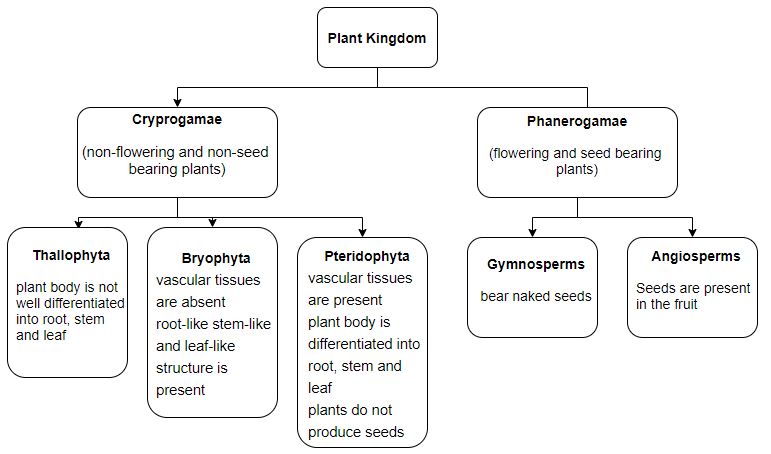
Algae
- The plant body is thallus, which may be filamentous, Colonial, unbranched or branched and massive
- Some of the special characteristics of the plant body of various algae are:>> Spirogyra (water-silk), Ulothrix- filamentous>> Volvox- colonial>> Unicellular- Chlamydomonas, Acetabularia (largest unicellular algae), also known as the umbrella plant>> Ectocarpus- filamentous branched and epiphytes (grow on other plants)>> Kelps- giant brown algae, profusely branched and massive, may reach up to the height of 100 metres>> Brown algae- holdfast attaches the plant to a substratum, the stalk is known as stipe, frond- leaf-like and carries out photosynthetic
- They have mostly aquatic habitat, that can be marine or freshwater
- Algae are autotrophic and have chlorophyll. Different shapes of chloroplast present are:>> Girdle shaped in Ulothrix>> Ribbon-shaped in Spirogyra>> Cup-shaped in Volvox and Chlamydomonas>> Reticulate in Oedogonium>> Disc-shaped in Caulerpa>> Star-shaped in Zygnema
- Reproduction is by a vegetative, sexual and asexual method
- Vegetative reproduction is by fragmentation
- Asexual reproduction is by various spores formation, e.g. zoospores (motile), Aplanospores, Akinetes (non-motile), etc.
- Sexual reproduction is by fusion of gametes. Sexual reproduction is of three types:
Isogamous: male and female gametes are similar in size, e.g. Ulothrix (gametes are motile or flagellated), Spirogyra (non-motile gametes)
Anisogamous: gametes are dissimilar in size, e.g. Eudorina, Chlamydomonas
Oogamous: female gamete is large and non-motile and male gamete is small and motile, e.g. Volvox, Fucus
- Some of the special reproductive structures and processes present in different algae are:>> Sexual reproduction by conjugation in Spirogyra>> Coceptacles of Sargassum, which is a flask-shaped cavity bearing male and female sex organs, antheridia and oogonia respectively>> In Chara sex organs are multicellular and jacketed known as globule (male antheridium) and nucule (female archegonium)
- The life cycle is mostly haplontic, Fucus has a diplontic life cycle, Ectocarpus, Kelps and Polysiphonia have haplo-diplontic life cycle
- Phycology – the scientific study of algae
- Three main classes of algae are Chlorophyceae (green algae), Phaeophyceae (brown algae), Rhodophyceae (red algae)
Economic Importance of Algae:
- Algae contribute to half of the total carbon dioxide fixation on the Earth. They increase the oxygen content of their habitat
- They are important primary producers in an ecosystem
- Algae are used as fodder and also in pisciculture
- Algae have medicinal properties and also used to prepare antibiotics, e.g. Chlorella, Ascophyllum, Polysyphonia, etc.
- Alginates like sodium laminarin sulphate and fucoidan are used as a blood anticoagulants
- Many algae are used as food, e.g. Laminaria, Sargassum, Porphyra, Ulva (Sea lettuce), etc.
- Chlorella (unicellular alga) has a rich protein content and frequently used by space travellers as a food supplement (single-cell protein – SCP)
- Hydrocolloids are commercially produced from certain brown and red algae, e.g. algin produced by brown algae and carageen is produced by red algae
- Agar (China grass), obtained from red algae such as Gracilaria and Gelidium, is widely used in laboratories as a growing medium for the tissue culture of microorganism and to prepare various desserts, jellies and icecreams
- Agar is a mixture of agarose (a polysaccharide) and agaropectin present in the cell wall of certain red algae
- Algae are also used in sewage treatment processes to increase the alkalinity and reduce bacteria
Bryophytes
- Bryophytes are non-vascular plants (lack xylem and phloem), plant body is not differentiated into root stem and leaves
- They are found in moist, shady and damp areas
- Bryophyta is categorised into three main classes: Hepaticopsida (liverworts), Anthocerotopsida (hornworts) and Bryopsida (mosses)
- Bryophytes are called “amphibians of plants” because they are terrestrial plants but need water to complete their life cycle
- The plant body is thallus like and prostrate or erect
- The main plant body is the gametophyte, i.e. haploid
- They lack true roots and attached to the substratum by rhizoids, stem-like and leaf-like structures are present
- Vegetative reproduction is by fragmentation, budding, tubers, gemmae, etc.
- Sexual reproduction is by the fusion of male and female gametes (antherozoids and egg or oospore) in the sex organs, which are multicellular and jacketed
- Antheridium produces biflagellated antherozoids
- Archegonium is flask-shaped and produces a single egg
- The Zygote does not undergo meiosis immediately and a short-lived multicellular diploid sporophyte develops. Some of the cells undergo meiosis and produce haploid spores, which develop into a photosynthetic haploid gametophyte
- The life cycle of bryophytes is haplo-diplontic. The gametophyte (haploid) is the main plant body, which is photosynthetic and independent. The diploid sporophyte is short-lived and partially or totally dependent and grows on the gametophyte
Economic Importance of Bryophytes:
- Bryophytes are of great ecological importance as they are the first organisms, that colonise on rocks and makes it suitable for the growth of higher plants by decomposing it
- Mosses form a dense mat on the soil, holds it together and prevent soil erosion by rainwater
- Mosses play an important role in bog succession
- Bryophytes are used for medicinal purposes, e.g. Sphagnum is used in the surgical dressing, Marchantia, Sphagnum and Polytrichum species has also medicinal benefits to cure liver, kidney and skin diseases
- Antibiotics are also extracted from bryophytes
- Mosses provide food for many herbivores
- Peat produced from a moss, Sphagnum is widely used as fuel
- Used as a packaging material due to their water holding capacity
Pteridophytes
- Pteridophytes have a vascular system and the main plant body is the diploid sporophyte
- The plant body is differentiated into root, stem and leaves
- The xylem of pteridophytes lacks vessels and the phloem lacks companion cells and sieve tubes
- They are present in damp, cool and shady places and also found in sandy-soil conditions
- The leaves may be small or large, e.g. Selaginella has small leaves (microphylls), Ferns have large leaves (macrophylls)
- Young leaves show circinate vernation (spirally coiled)
- The spore-producing organ is sporangia, which is present on sporophylls (fertile leaves)
- In Selaginella and Equisetum, sporophylls form a distinct cone known as strobili
- Spores are produced after meiosis and germinate to form the haploid gametophyte also known as a prothallus
- The gametophyte (prothallus) is heart-shaped, multicellular, small and inconspicuous. It is mostly green and performs photosynthesis
- The gametophyte bears antheridia and archegonia, water is required for fertilization
- Young embryos are formed from the development of the zygote within the female gametophyte, which is the precursor to the development of seed in higher plants
- The zygote develops into a well-differentiated sporophyte, which is the dominant phase of pteridophytes
- Mostly pteridophytes are homosporous, i.e. spores germinating into male and female gametophyte are of a similar kind
- Salvinia and Selaginella are heterosporous, i.e. they produce large megaspores and small microspores, that develop into the female and male gametophyte respectively
- The life cycle of pteridophytes is haplo-diplontic, the dominant phase is diploid sporophyte and it alternates with short-lived but independent autotrophic/ saprophytic haploid gametophyte
- Pteridophytes include horsetails and ferns. Main examples are Psilotum, Lycopodium, Selaginella, Equisetum, Pteris, Dryopteris, Adiantum, etc. classified into four main classes; Psilopsida, Lycopsida, Sphenopsida and Pteropsida
Economic Importance of Pteridophytes:
- Pteridophytes are used as soil binders. They bind soil even at the slopes of hills
- Pteridophytes are a good source of food, e.g. Marsilea sporocarps are a good source of starch
- They are used as ornamental plants, leaves are used for the purpose
- Some of the pteridophytes have a medicinal value such as Dryopteris
- Azolla is used as a biofertilizer in the paddy fields due to nitrogen-fixing ability. It has a symbiotic association with a nitrogen-fixing cyanobacteria Anabaena azollae
- Equisetum stems are used for cleaning utensils
Gymnosperms
- Gymnosperms are characterised by the presence of naked seed. Their ovules are exposed and not covered by the ovary wall
- Sequoia (giant redwood) is the tallest, Ginkgo (maidenhair tree) is a living fossil, Zamia is the smallest gymnosperm
- Mostly tap roots are present. In some of the genera like Pinus, symbiotic association with a fungus known as mycorrhiza is found and in others like Cycas, symbiotic association with nitrogen-fixing cyanobacteria is present and the roots are known as coralloid roots
- The stem may be branched, as in Cedrus and Pinus or unbranched, as in Cycas
- Ephedra and Gnetum have xylem vessels
- Leaves may be simple or compound, foliage leaves of Cycas are pinnate and fall off after a few years
- Leaves of gymnosperms have adaptations for extreme environmental conditions. In conifers, leaves are needle-like with sunken stomata and a thick cuticle to reduce the water loss
- Male and female spores are different in gymnosperms, i.e. heterosporous, male and female strobili are found either on the same tree as in Pinus or on different trees as in Cycas. Microspores are produced in microsporangia of male strobili. The male gametophyte is developed from microspores. It is made up of a few cells and known as pollen grains. Megaspores are produced in megasporangia borne on female strobili. The ovule is made up of nucellus and envelope, one of the cells of nucellus is differentiated into megaspore mother cell. Four haploid megaspores are formed after meiotic division in the megaspore mother cell. One of the megaspores develops into a female gametophyte. Two or more archegonia are present within the female gametophyte.
- Both the gametophytes (male and female) are not free-living instead retained within sporangia
- Pollen grains are released and reach the ovules openings by air currents. Pollen tube having male gamete grows inside the ovule and reaches archegonia, where it releases its contents
- After fertilization, an embryo develops from the zygote and the ovule forms seeds
- The life cycle of gymnosperms is diplontic, the diploid sporophyte is the dominant phase
Economic Importance of Gymnosperms:
- Gymnosperms have high medicinal value. It is used to cure various diseases and many drugs are extracted. Ephedrine- extracted from Ephedra and used to cure cough and cold and other respiratory problems. Taxol- extracted from Taxus brevifolia, is an anti-cancer drug. It controls cell division by inhibiting spindle fibre formation. It is used in chemotherapy to treat lung cancer, ovarian cancer, pancreatic cancer, breast cancer, etc. Gum of Cycas is used as an antidote against snake venom and juice of young leaves is used to cure blood vomiting
- Many food products are obtained from gymnosperms. They are a rich source of starch, e.g. sago is obtained from Cycas, eatable seeds of Pinus (pine nuts or chilgoza) and Gnetum
- Gymnosperms are a good source of timber for making furniture, musical instruments, pencil, etc. the wood is known as softwood and it is lightweight, durable and resistant to insects and fungus
- Cedrus deodara has scented wood, the wood of Podocarpus is used to prepare plywood
- Many species are used to extract edible oil and oil for making perfumes and soaps
- Tannins extracted from the bark is used in the leather industry
- Various useful products such as gum, turpentine, resins such as Canada balsam, amber are obtained
- Wood pulp is used to make paper, fibres are used to make rope, fishing net, as a stuffing for pillows
Angiosperms
- Angiosperms are flowering plants and have seeds enclosed in fruits and have well-developed flowers containing reproductive organs
- The size of angiosperms vary from as small as Wolffia with 0.1 cm to tall trees of Eucalyptus, which may grow as long as 100 m
- Angiosperms are divided into two classes; Monocotyledons, Dicotyledons
- The flower contains 4 parts; calyx (sepals), corolla (petals), androecium and gynoecium (male and female reproductive parts respectively)
- An ovule bears embryo sac
- The embryo sac: consists of 7 cells and 8 nuclei>> 1 egg cell, haploid>> 2 synergids, haploid>> 3 antipodal cells, haploid>> 1 central cell with 2 polar nuclei, which fuse to form a secondary nucleus, which is diploid
Double fertilization
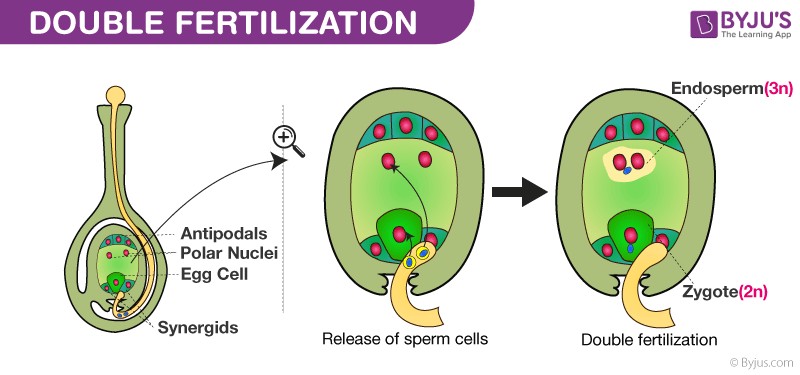
- Double fertilization is the characteristic of angiosperms
- Two male gametes enter the embryo sac through the pollen tube
- The egg and one male gamete fuse together to form a diploid zygote, the process is known as syngamy
- The second male gamete fuses with the diploid secondary nucleus, the process is known as triple fusion and triploid endosperm is formed
- It is known as double fertilization because two fusions happen, i.e. syngamy and triple fusion
- After fertilization, antipodal cells and synergids degenerate
- Ovaries develop into fruit and ovules develops into a seed
- The life cycle of angiosperms is diplontic, i.e. diploid sporophyte is the dominant, independent and photosynthetic phase of the plant. The gametophyte or haploid stage is represented only by a single or few-celled stage


No comments:
Post a Comment